Sculpture
Rhino Horn
R12,000.00
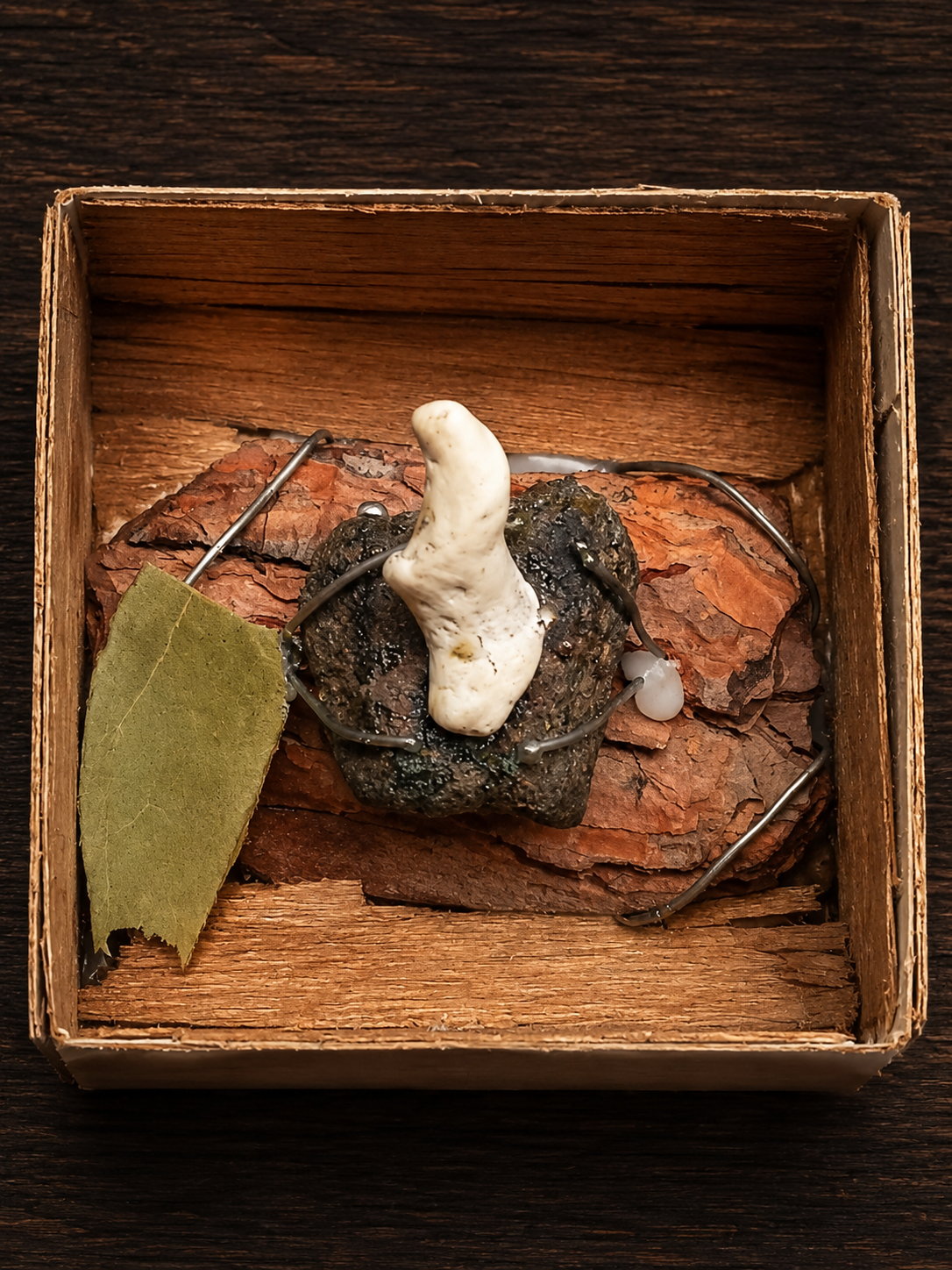
Shell on rock
When the viewer encounters **Rino Horn**, the piece does not appear to demand attention. Instead, it waits quietly, inviting a slower kind of looking. It feels less like an object that was constructed and more like something discovered — a fragment lifted from the edge of land, sea, and memory.
The shell rising from the rock becomes the central gesture of the work. Its horn-like form suggests strength, but not in an obvious or forceful way. There is a quiet power in its shape. The shell remains delicate, yet its placement on the dark stone gives it weight and authority. It begins to feel like a small sign of survival.
The rock beneath it grounds the piece. It carries a sense of age, pressure, and stillness. Against it, the shell feels almost like something emerging from deep time. The contrast between shell and stone creates the emotional center of the work: softness held by hardness, fragility supported by permanence, the sea meeting the earth.
The wire surrounding the form adds tension. It can be read as support, protection, or restraint. This uncertainty gives **Rino Horn** its mystery. The object seems preserved, but also contained, as though it holds a story that cannot be fully released.
Through its simple materials, the piece becomes more than a shell on a rock. It becomes a quiet meditation on what remains. The bark, the stone, the shell, and the wire each carry signs of use, weathering, and time. Together, they suggest that meaning can survive in fragments.
**Rino Horn** is powerful because it does not explain itself immediately. It asks the viewer to slow down and consider the importance of overlooked things. In its stillness, the piece reveals a deeper story about endurance, memory, and the hidden strength inside fragile forms.
When the viewer encounters **Rino Horn**, the piece does not appear to demand attention. Instead, it waits quietly, inviting a slower kind of looking. It feels less like an object that was constructed and more like something discovered — a fragment lifted from the edge of land, sea, and memory.
The shell rising from the rock becomes the central gesture of the work. Its horn-like form suggests strength, but not in an obvious or forceful way. There is a quiet power in its shape. The shell remains delicate, yet its placement on the dark stone gives it weight and authority. It begins to feel like a small sign of survival.
The rock beneath it grounds the piece. It carries a sense of age, pressure, and stillness. Against it, the shell feels almost like something emerging from deep time. The contrast between shell and stone creates the emotional center of the work: softness held by hardness, fragility supported by permanence, the sea meeting the earth.
The wire surrounding the form adds tension. It can be read as support, protection, or restraint. This uncertainty gives **Rino Horn** its mystery. The object seems preserved, but also contained, as though it holds a story that cannot be fully released.
Through its simple materials, the piece becomes more than a shell on a rock. It becomes a quiet meditation on what remains. The bark, the stone, the shell, and the wire each carry signs of use, weathering, and time. Together, they suggest that meaning can survive in fragments.
**Rino Horn** is powerful because it does not explain itself immediately. It asks the viewer to slow down and consider the importance of overlooked things. In its stillness, the piece reveals a deeper story about endurance, memory, and the hidden strength inside fragile forms.
A one-of-a-kind original — only one available.
SKU: sculp1112